Humane TNR: What Careful Community-Cat Support Looks Like
A practical overview of safe trapping, veterinary sterilization, return or placement planning, and the monitoring that makes community-cat care more responsible.
StrayToHome editorial team
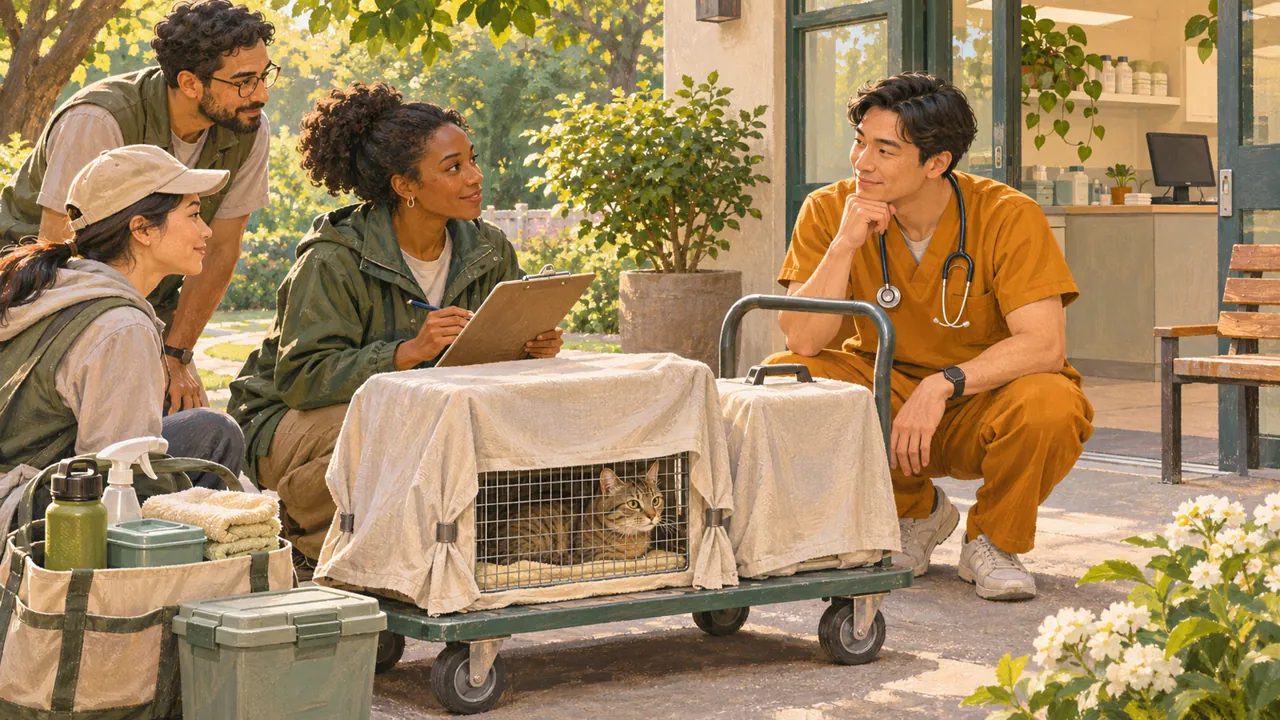
TNR is not a quick fix or a reason to act alone. It is a planned, humane process that connects safe trapping with veterinary care, responsible decisions about return or placement, and continued observation.
Start by observing, not rushing
Keep a safe distance and notice whether the cat appears injured, has an ear tip, or is being fed by a local caregiver. A friendly cat may be lost or owned, so contacting a local rescue, veterinarian, or animal-control resource is a safer first step than immediate removal.
Avoid handling unfamiliar cats without appropriate training and equipment. A frightened animal can be injured or injure a person when stressed.
TNR is a care pathway
Humane community-cat work may include trapping, scanning for identification, veterinary assessment, sterilization, vaccination where locally appropriate, and a clear plan for return, foster, adoption, or another safe outcome.
The most appropriate pathway depends on the individual animal, local law, the presence of a caregiver, and the resources available. Work with qualified local partners whenever possible.
Monitoring makes care continuous
After treatment, community members can help by observing for new, ill, or injured cats and by keeping food, water, and shelter routines clean and consistent. This is how a one-time intervention becomes ongoing welfare support.